
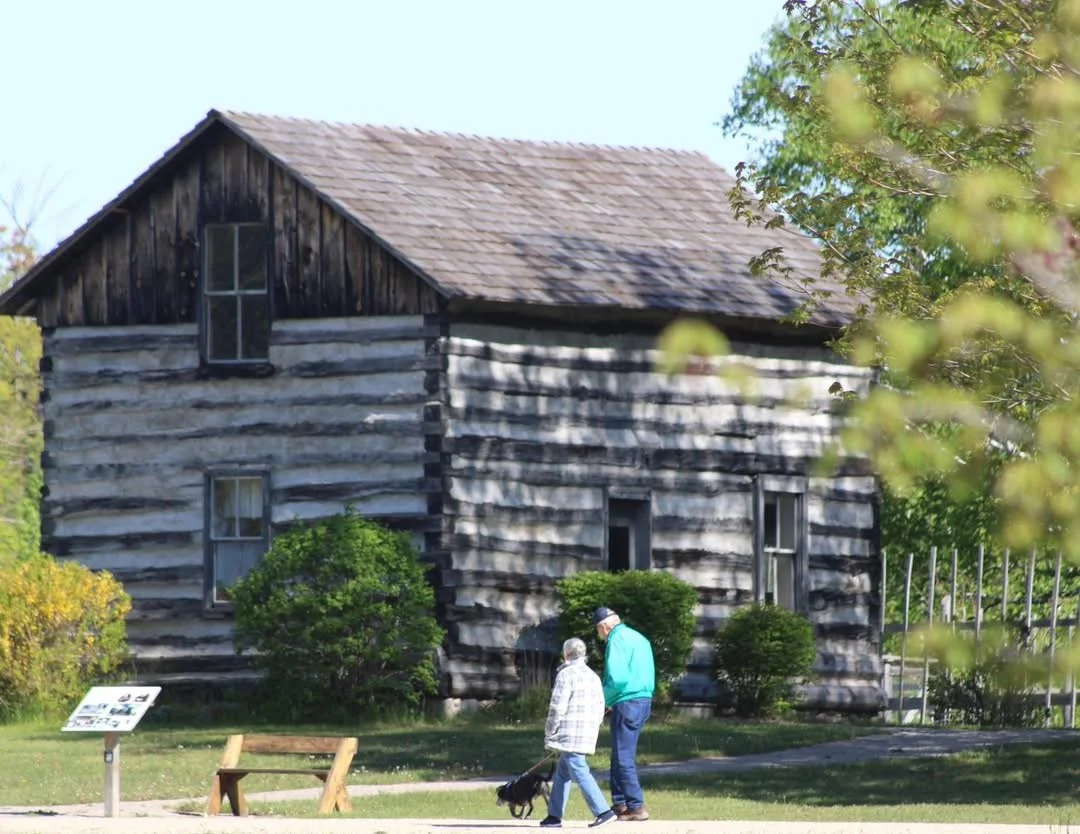
Detweiler Log Cabin
A Historic 19th-Century Log Cabin in Northern Michigan
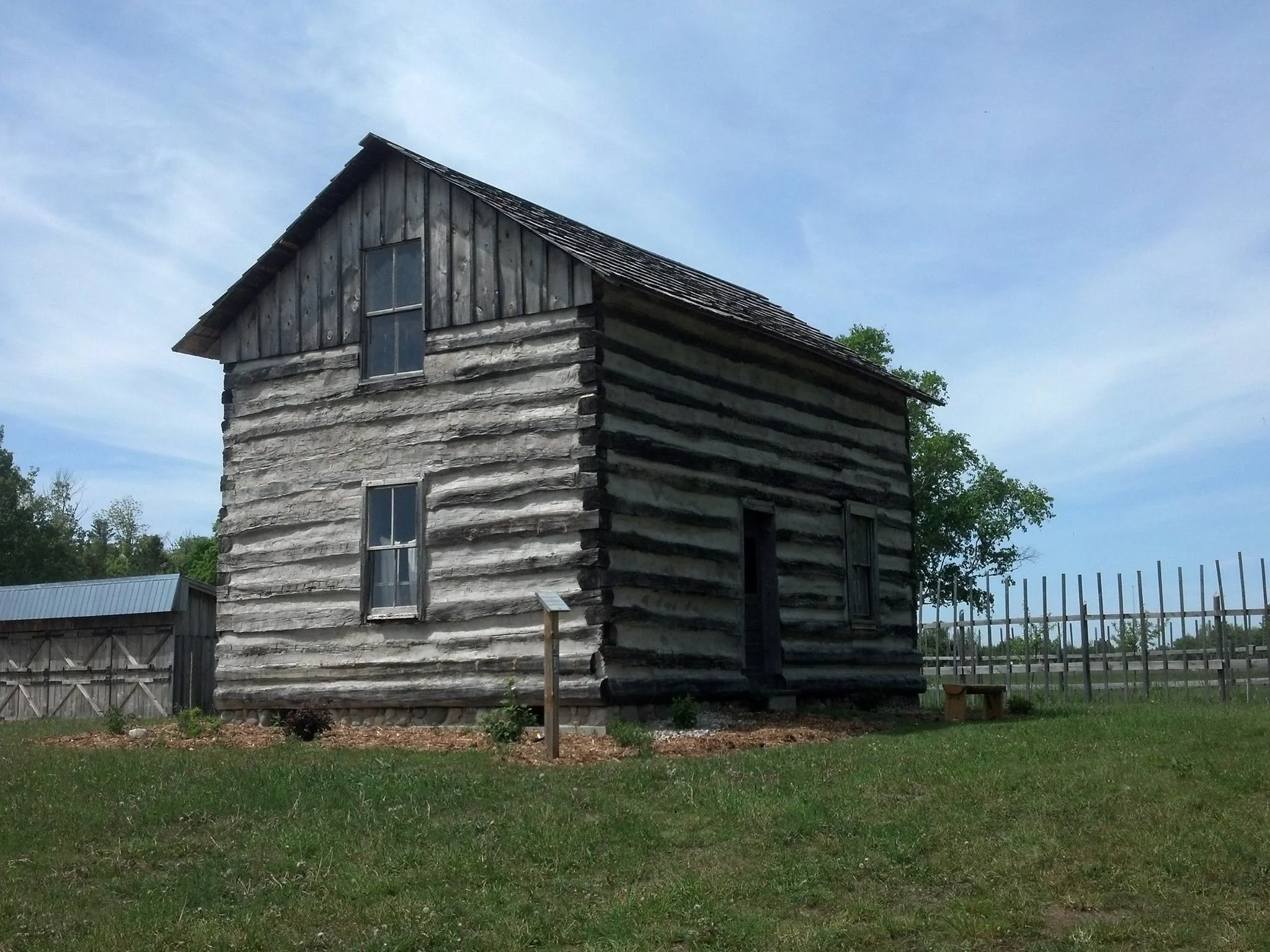
The Detweiler Log Cabin is one of the original historic buildings located in the main circle of Heritage Village, offering visitors an authentic glimpse into rural life in late 19th-century northern Michigan. Built around 1883, this log cabin reflects the resourcefulness, craftsmanship, and faith-centered community life of early settlers in the Great Lakes region.

Built by Necessity: Log Cabins and Frontier Life
During the 1800s, many local farmers lacked the financial means to construct large or decorative homes. Instead, they built log cabins using rough-hewn trees harvested directly from their land. These structures were practical, affordable, and well suited to Michigan’s harsh winters.
Log cabins of this era typically featured:
Hand-hewn logs joined with simple corner notching
Minimal interior rooms with multifunctional living spaces
Basic heating systems centered around wood stoves
Few windows and limited insulation
A strong reliance on family labor and self-sufficiency
The Detweiler Log Cabin is a well-preserved example of this architectural tradition.
The Detweiler Family and Community Roots
Christian Detweiler, a farmer, carpenter, and Mennonite minister, built this cabin with his family around 1883. While families with greater financial means—such as the Stimpson family, who built a white frame house across the field to the east—constructed more refined homes, the Detweilers’ log cabin represented skilled craftsmanship combined with necessity.
Christian Detweiler was deeply involved in his community. In addition to helping neighbors build their homes, he assisted in the construction of the local Mennonite church in 1885, which still stands today one mile west of US-31 on Brutus Road. Christian, his wife Susan, and multiple generations of relatives are buried in the cemetery behind the church, underscoring the family’s lasting connection to the area.
Fire Risk and Daily Life in a Log Cabin
Early log cabins often lacked proper chimneys. The Detweiler Log Cabin originally used an extended stovepipe through the roof, a common but dangerous solution that frequently led to house fires.
To protect the family:
A ladder was always kept nearby
Pails of water were kept ready at all times
Children were trained to draw water from the well and carry full buckets up the ladder
The mother waited above to extinguish flames as quickly as possible
Thanks to this preparedness and teamwork, fires were successfully put out, highlighting both the dangers of early frontier homes and the resilience of pioneer families.

Relocation and Restoration of the Cabin
The Detweiler Log Cabin was originally located in Brutus, approximately 13 miles south of Heritage Village, and was later carefully moved to its current site. Restoration efforts have focused on preserving the home’s historic integrity while making it accessible to modern visitors.
Restoration highlights include:
Preservation of the original log structure
Historic wall coverings
Original bead-board in the eating room
Period-appropriate furnishings
Return of the original family bed, assisted by Detweiler descendants
Family members continue to play an active role in interpreting the home’s history, ensuring the story is told with authenticity and care.



Frequently Asked Questions About Log Cabins
-
A log cabin is a simple structure built primarily from horizontally stacked logs, typically notched at the corners and sealed with materials like mud, clay, or moss to block wind and moisture. In the Midwest and Great Lakes region between the 1880s and 1910s, log cabins were commonly constructed using locally harvested timber, reflecting the area’s dense forests and strong logging industry.
Log cabins were usually small, practical dwellings with one or two rooms, a stone or brick fireplace or stove for heat, and minimal ornamentation. Their design prioritized speed of construction, durability, and insulation, making them well suited to the cold winters and rural conditions of the Great Lakes.
While often associated with early frontier life, many log cabins in this period were permanent homes for settlers, farmers, and loggers, and some later evolved into more complex log houses as families and communities grew.
-
Log cabins were built using natural, locally available materials, making them practical and affordable for settlers in the Midwest and Great Lakes region during the late 19th and early 20th centuries. The primary building material was timber, most commonly pine, cedar, oak, hemlock, or maple, depending on what was abundant in the surrounding forests.
The logs were hand-hewn or roughly squared and stacked horizontally, with corners secured using notching techniques such as saddle or dovetail notches. Gaps between the logs were filled with chinking, a mixture of mud, clay, lime, straw, or moss, which helped insulate the cabin against wind and cold Great Lakes winters.
Additional materials included stone or brick for foundations and fireplaces, wooden shingles or shakes for roofing, and hand-made nails or wooden pegs for fastening. Floors were often made from wide wooden planks, while windows used glass panes set in wooden frames once they became affordable and available. Together, these materials created sturdy, weather-resistant homes well suited to the climate and resources of the Great Lakes region.
-
The main difference between a log cabin and a log house is size, complexity, and intended use. In the Midwest and Great Lakes region during the late 1800s and early 1900s, a log cabin was typically a small, simply built structure designed for quick construction and basic shelter, often consisting of one or two rooms.
A log house, by contrast, was larger and more permanent, with multiple rooms, finished interiors, and features such as framed floors, interior walls, and sometimes porches or lofts. Log houses often included glass windows, improved chimneys or stoves, and decorative details, reflecting greater stability, prosperity, or long-term settlement.
In many Great Lakes communities, families began in a log cabin and later expanded or replaced it with a log house as resources became available. While both used log construction, the term log cabin is most closely associated with early or temporary housing, whereas log house reflects a more developed, long-term home.
-
Log cabins in the Great Lakes region were home to a wide range of people, particularly during the late 19th and early 20th centuries. From the 1880s to the 1910s, they were commonly lived in by settlers, farmers, loggers, fishermen, and their families who worked the land and natural resources of Michigan, Wisconsin, Minnesota, and surrounding states.
In heavily forested areas, especially in Northern Michigan and Wisconsin, log cabins were often used by logging crews and seasonal workers, while farming families built cabins as their first permanent homes on newly cleared land. Some cabins also housed traders, craftsmen, and homesteaders in rural or developing communities.
Because log cabins were practical, affordable, and built with local materials, they served people at many stages of settlement. For some, a log cabin was a temporary dwelling, while for others it became a long-term family home, later expanded into a larger log house as communities and economies grew throughout the Great Lakes region.
-
Log cabins were heated primarily by wood-burning fireplaces or cast-iron stoves, which provided both warmth and a place for cooking. In the Great Lakes region during the late 1800s and early 1900s, wood was plentiful, making firewood the most practical heat source for long, cold winters.
Insulation came largely from the logs themselves, which were thick and slow to transfer heat. Gaps between logs were sealed with chinking, a mixture of clay, mud, lime, straw, or moss, to block drafts and retain warmth. Over time, more durable lime-based chinking replaced earlier organic mixtures.
Additional insulation methods included small windows, heavy fabric or wooden shutters, rugs or straw on floors, and interior wall coverings such as cloth or newspaper. Combined, these techniques made log cabins surprisingly warm and well suited to the harsh winter conditions of the Great Lakes region.
-
Daily life in a log cabin was centered on self-sufficiency, routine, and close family living, especially in the Great Lakes region during the late 19th and early 20th centuries. Cabins were small, so families shared tight quarters, with many daily activities—cooking, eating, sleeping, and working—taking place in the same room.
Mornings often began with tending the fire, preparing meals on a wood stove or hearth, and completing chores such as hauling water, chopping firewood, caring for animals, or working in the fields or forests. In logging regions of Northern Michigan, Wisconsin, and Minnesota, work was often seasonal, shaping daily rhythms and family roles.
Evenings were quieter and focused on family time, including storytelling, reading by lamplight, mending clothes, or simple entertainment. Despite the hard work and limited space, log cabins provided warmth, security, and stability, forming the heart of daily life for many Great Lakes settlers and working families.
Visit the Detweiler Log Cabin
Today, the Detweiler Log Cabin stands as a powerful reminder of pioneer life, Mennonite heritage, and 19th-century log cabin construction in northern Michigan. Visitors to Heritage Village can step inside and experience the ingenuity, faith, and determination that shaped early rural communities in the Great Lakes region.