
Freedom School
Explore a historic one room school house from the Great Lakes region.

Freedom School
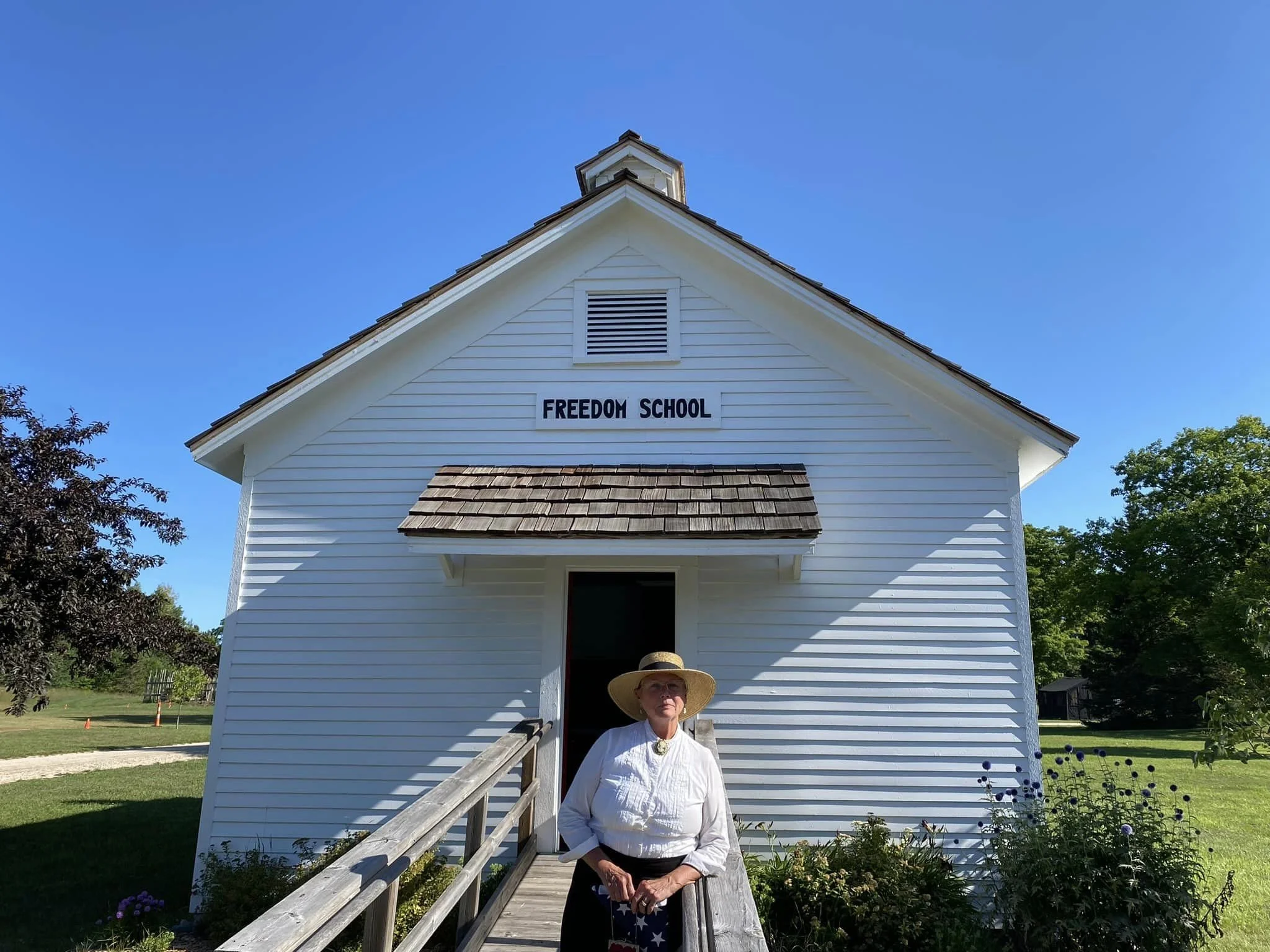
The Freedom School in Heritage Village, northern Michigan, is a historic one room school house that served local students for decades. Built in 1885 to replace Mackinaw City’s original 1871 log cabin school, this charming one room schoolhouse was located in the town of Freedom near Mill Creek Park, along what is now US-23 southeast of Mackinaw City. A small roadside sign marks the site of this long-gone community. The Freedom School continued educating area children until the 1930s, and the building eventually passed into private hands in 1949.
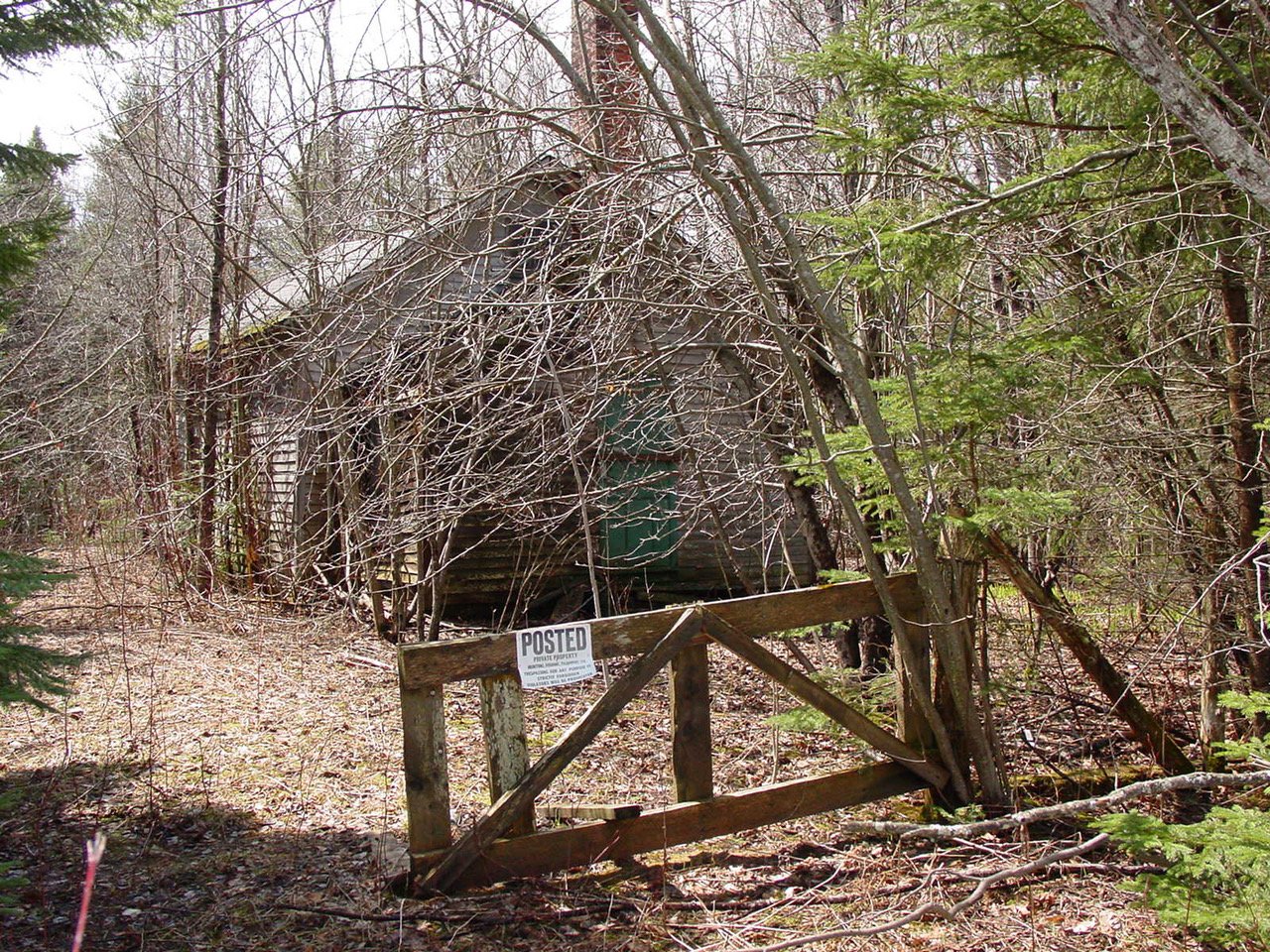
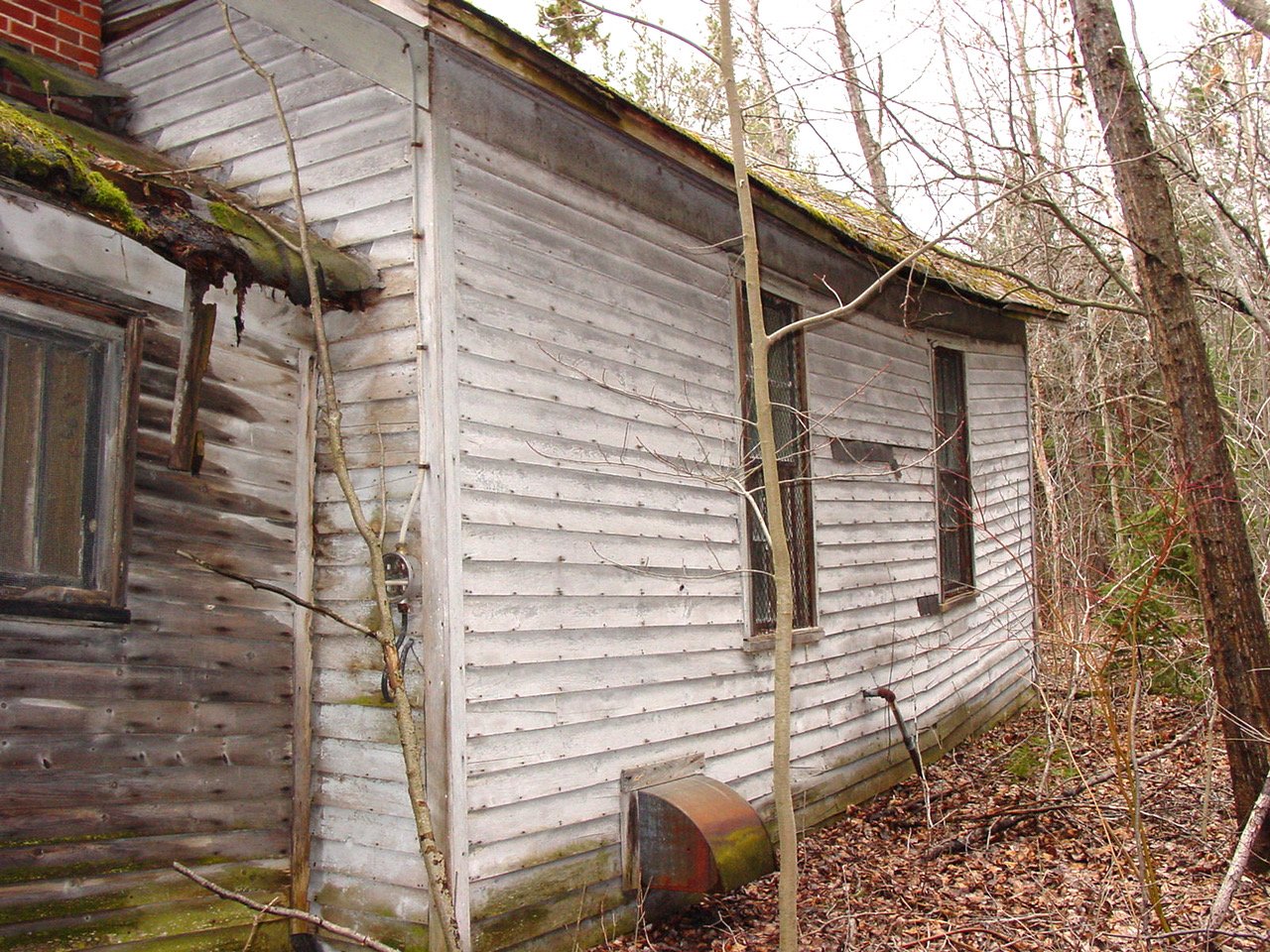
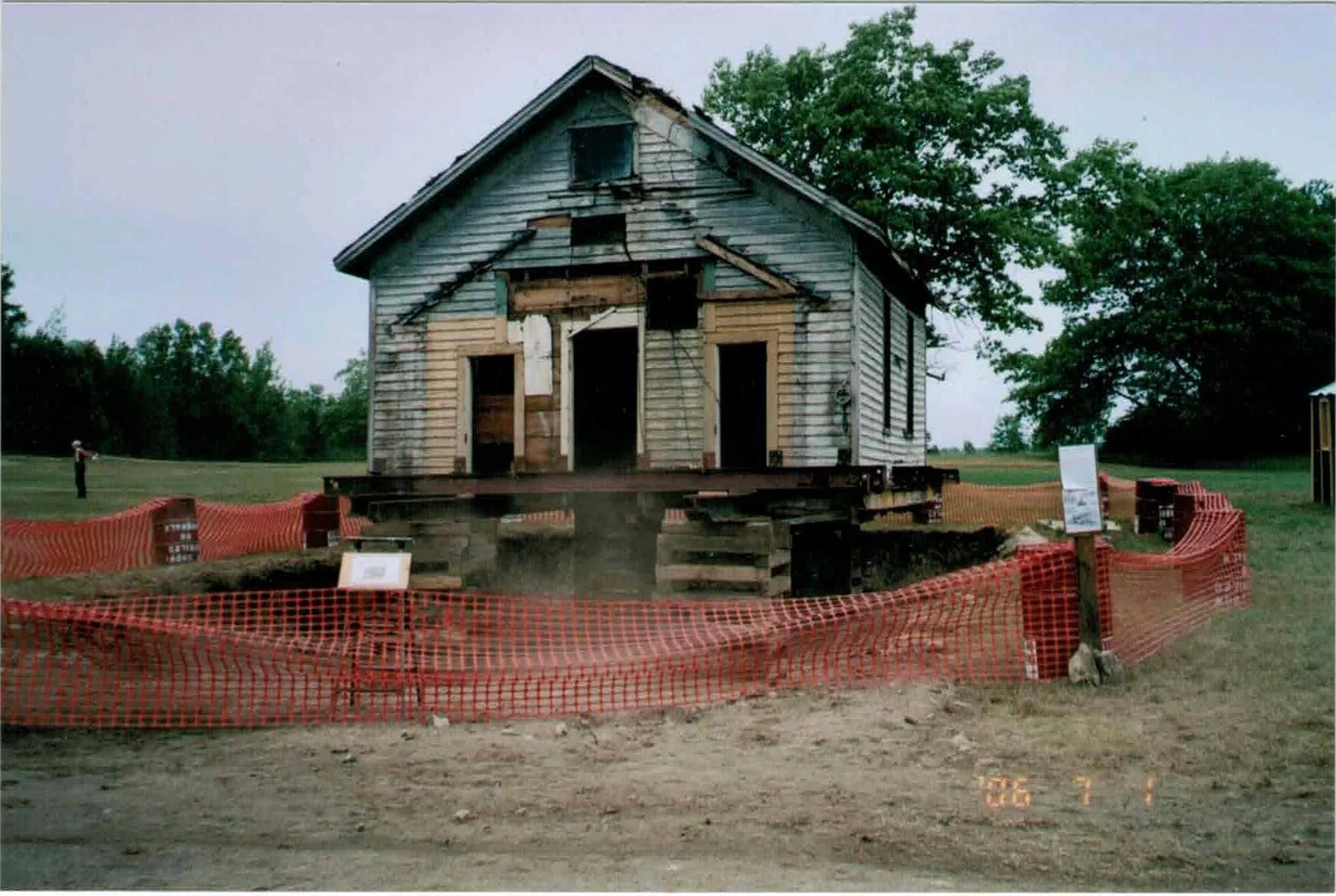
When the Mackinaw Area Historical Society discovered the neglected school in the woods, its floor had decayed into the mud beneath it. After the owners generously donated the building, an architect reassured the society: “Any building can be saved; it is only a matter of the amount of work you want to do.” Inspired by this advice, MAHS members embarked on the careful restoration of this treasured northern Michigan one room school house.
Like the pest house, this structure is another inexpensive building with a shelf chimney. Robert Frost wrote the following poem about his dislike of a shelf chimney.

“Any building can be saved; it is only a matter of the amount of work you want to do.”
— Architect for the project and inspiration for MAHS



Frequently Asked Questions
Want to learn more about one room school houses? Take a look at the FAQ or visit Freedom School to learn more.
-
A one-room schoolhouse is a historic school building where one teacher educated children of multiple ages and grade levels together in a single classroom, a common form of public education in Northern Michigan and the Great Lakes region from the mid-1800s through the early 1900s.
These schools typically served small, rural communities, including farming settlements, logging camps, and isolated towns, where population size and geography made larger schools impractical. Students—often ranging from ages 5 to 14—sat in rows of desks and learned reading, writing, arithmetic, history, and geography through shared lessons, recitation, and peer learning.
In Northern Michigan, one-room schoolhouses were often community-built, heated by a wood-burning stove, and designed to withstand long winters and remote conditions. More than just schools, they functioned as community centers, hosting meetings, social gatherings, and civic events, making them a vital part of daily life in the Great Lakes region.
-
Children from local rural communities attended one-room schoolhouses, typically ranging in age from 5 to 14 years old, though older students sometimes remained longer to complete advanced coursework. In Northern Michigan and the Great Lakes region, these students were often the children of farmers, loggers, fishermen, and tradespeople living in small or isolated settlements.
Boys and girls learned together in the same classroom, grouped by ability rather than age, and advanced at their own pace. Attendance could be seasonal, especially in Northern Michigan, where children were often needed at home during planting, harvest, or logging seasons, and harsh winter weather sometimes limited travel to school.
One-room schoolhouses served nearly every child in a district regardless of background, making them an inclusive and practical form of education in rural Great Lakes communities during the 19th and early 20th centuries.
-
Students in a one-room schoolhouse were taught by a single teacher who instructed multiple grade levels at the same time, using a structured but flexible approach. In Northern Michigan and the Great Lakes region, teachers relied on recitation, memorization, and individualized lessons, moving from one group of students to another throughout the day.
While one age group worked quietly at their desks, others recited lessons aloud or received direct instruction. Older students often helped younger pupils, reinforcing their own learning while supporting the classroom. Lessons emphasized practical subjects such as reading, writing, arithmetic, history, and geography—skills considered essential for life in rural Great Lakes communities.
Because class sizes were small, teachers adapted instruction to each student’s ability rather than age. This method allowed children to progress at their own pace, a necessity in Northern Michigan where attendance could be affected by farm work, logging seasons, and severe winter weather.
-
One-room schoolhouses focused on core academic subjects that prepared students for everyday life, work, and citizenship. In Northern Michigan and the Great Lakes region, instruction typically centered on reading, writing, spelling, and arithmetic, often referred to as the “three R’s.”
Students also studied history and geography, with lessons emphasizing the United States, Michigan, and the surrounding Great Lakes. Older students might learn grammar, composition, basic algebra, and civics, while younger children practiced phonics and penmanship.
In many Northern Michigan schoolhouses, education extended beyond textbooks. Students were taught practical skills and moral instruction, including public speaking through recitation, problem-solving, responsibility, and cooperation—qualities valued in rural and frontier communities. Seasonal topics, such as agriculture or local industry like logging, were sometimes incorporated into lessons to reflect daily life in the Great Lakes region.
-
One-room schoolhouses used simple, durable books and shared classroom materials, often supplied by families or the local school district. In Northern Michigan and the Great Lakes region, the most common textbooks were readers, spellers, arithmetic books, and copybooks, with the McGuffey Readers among the most widely used for reading, moral lessons, and public speaking.
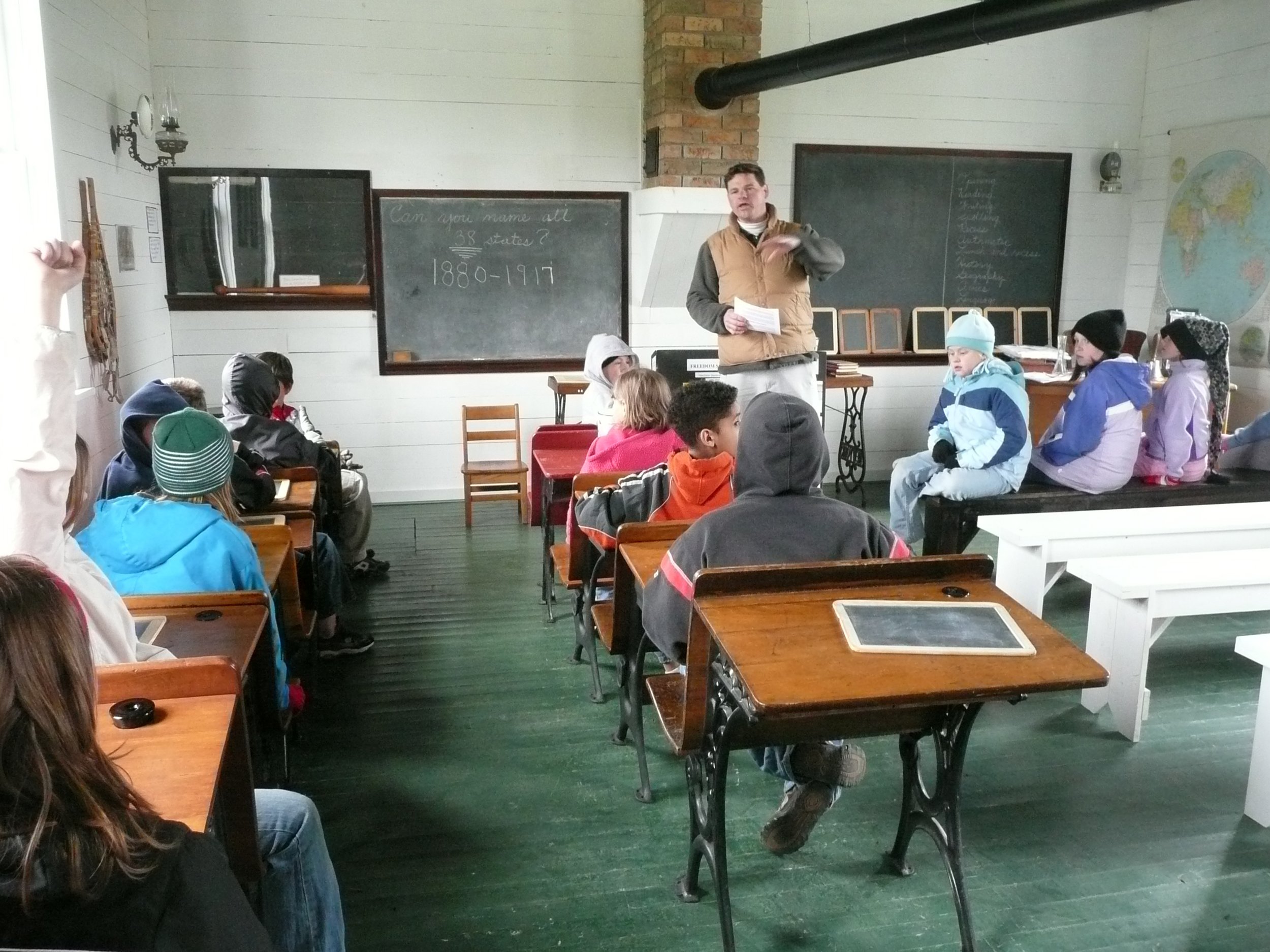
Students typically shared textbooks across multiple grade levels and reused them for many years. Writing was done on slates and slate pencils, which could be erased and reused—an important feature in rural communities where supplies were limited. Chalkboards, wall maps of the United States and the Great Lakes, and handwritten lesson charts were common classroom tools.
Because many Northern Michigan schoolhouses were remote, teachers relied on ingenuity and repetition rather than abundant materials. Books were central to instruction, but learning also came through oral recitation, memorization, and practical examples drawn from everyday life in Great Lakes farming and logging communities.
-
One-room schoolhouses were typically taught by a single teacher, often a young adult from the local community or a nearby town. In Northern Michigan and the Great Lakes region, these teachers were usually women, although men sometimes filled the role, especially in remote or frontier areas. Many were recently trained in normal schools—early teacher-training institutions—or had practical experience from their own schooling.
Teachers were responsible for instructing all grade levels, managing the classroom, maintaining discipline, and often performing administrative duties such as recording attendance and collecting fees. In rural Northern Michigan, the teacher often lived near or in the schoolhouse, especially when communities were remote, and became a central figure in local life, participating in community events and helping organize social gatherings.
Because resources were limited, teachers needed creativity, patience, and adaptability, using oral lessons, slates, textbooks, and student helpers to reach every child. Their work was critical in providing education to the small, dispersed populations of Great Lakes farming and logging communities.
-
One-room schoolhouses were typically heated by a single wood-burning stove located in the classroom, which provided warmth during the harsh Northern Michigan winters. Teachers and older students often helped chop, carry, and maintain the wood, making stove care a daily responsibility. The stove’s heat was critical, especially in remote Great Lakes communities where the building might otherwise be bitterly cold.
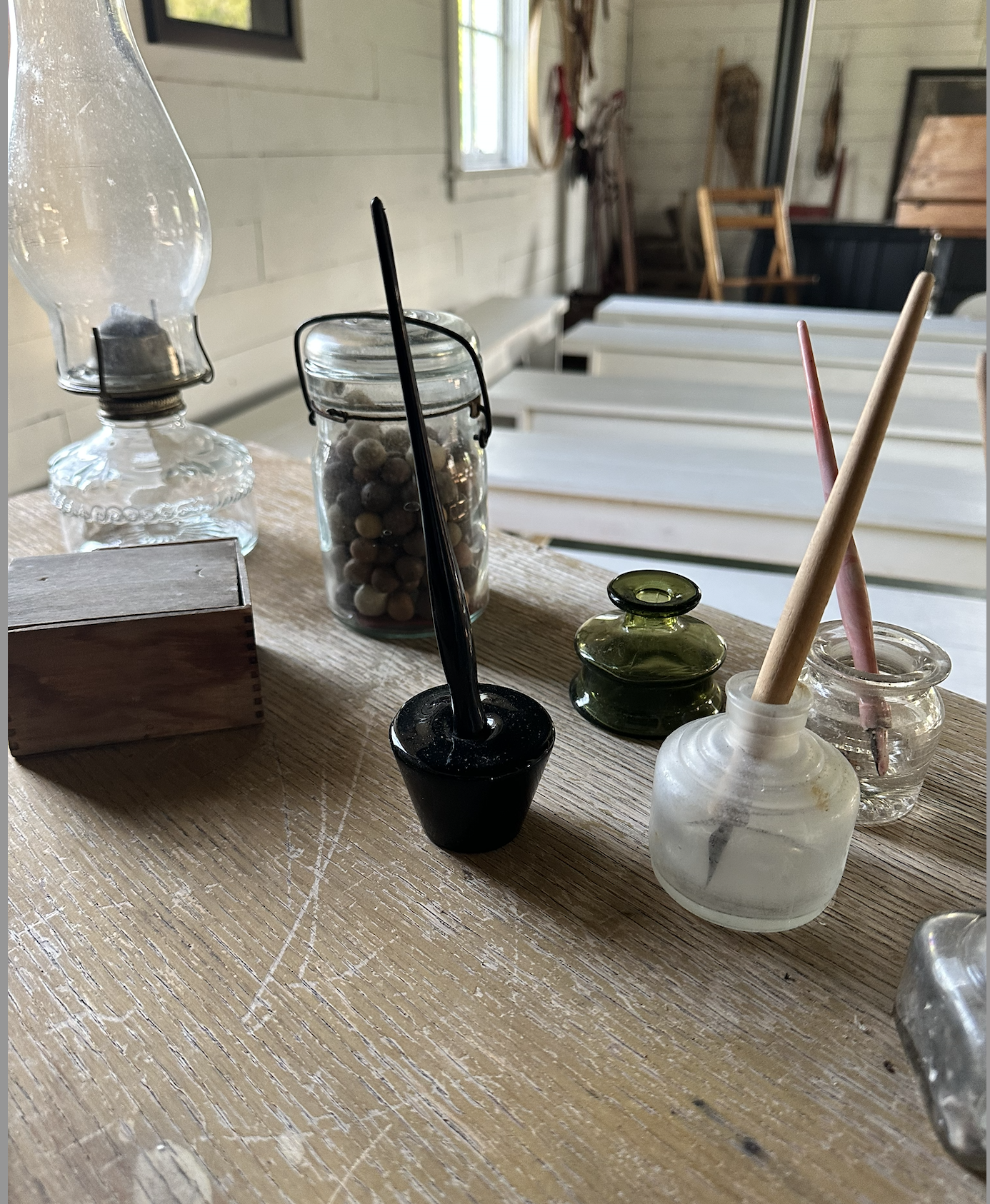
Lighting was usually provided by windows for daylight and oil lamps or kerosene lanterns for darker months or early mornings, as electricity was rare in rural areas until well into the 20th century. Classrooms were designed to maximize natural light, with large windows often facing south to capture sunlight. Students and teachers adapted to dim or uneven light by arranging desks strategically near windows and using slates or paper close to the light source.
These practical systems shaped daily routines, requiring careful attention to fire safety, fuel supply, and positioning for comfort, and they underscore the resilience and ingenuity of Great Lakes communities in maintaining education through long, snowy winters.