
Help Us Raise the Barn
Building Our History, Beam by Beam
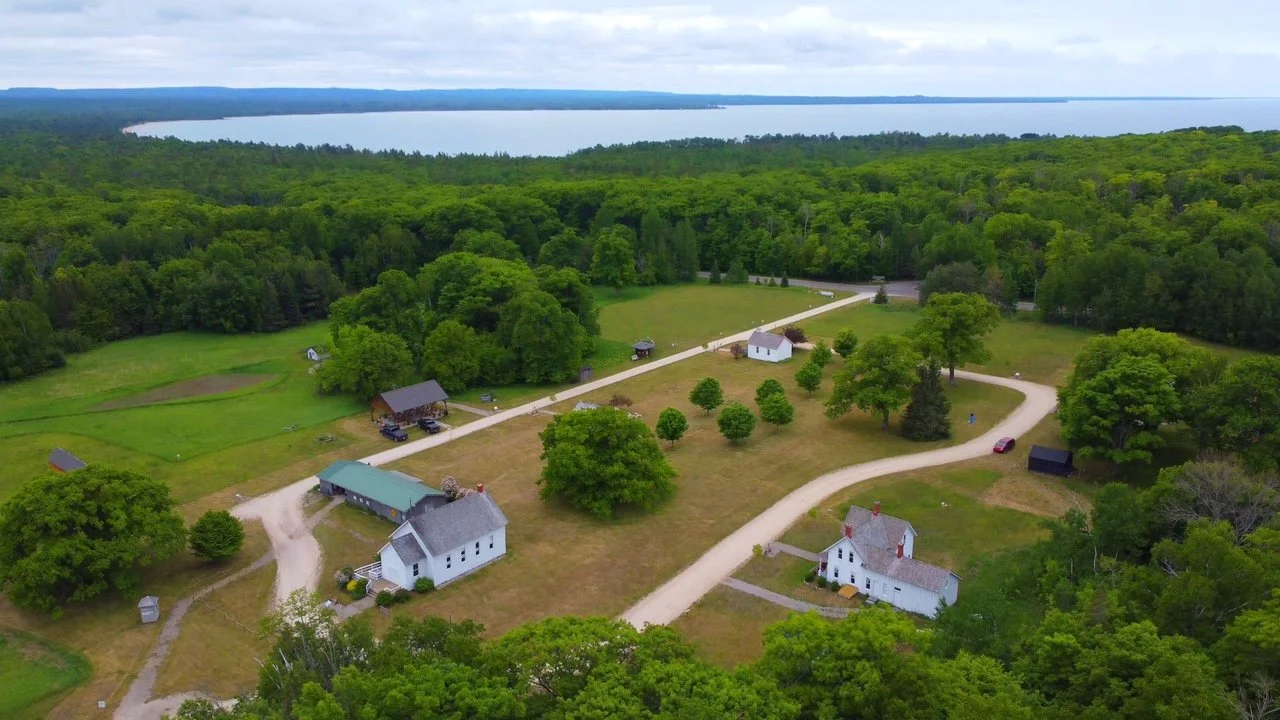
The Mackinaw Area Historical Society is launching a capital campaign to construct the Fornwald Jahn Memorial Barn. A historic timber-frame barn at Heritage Village, creating a new home for agricultural history, hands-on demonstrations, education, and much more.
Help us raise the Fornwald Jahn Memorial Barn and bring Northern Michigan’s farming heritage to life for generations to come.
A Barn Is More Than a Building. It’s a Place Where History Happens.
Farming was central to life in Northern Michigan. Our communities were built by the people who cleared the land, raised livestock, grew crops, made tools, and worked together to build a future.
We want to tell that story at Heritage Village.
Our new historic timber-frame barn will become a gathering place where visitors can experience the agricultural traditions that helped shape our region.
Inside the barn, visitors will eventually discover:
Historic Farming Tools
Explore the equipment, implements, and everyday objects that made farm life possible.
Hands-On Trade Demonstrations
See traditional skills and trades brought to life through demonstrations and special programming.
Seasonal Educational Programs
Give children, families, and school groups an opportunity to learn by doing.
This is a barn we can all help build.
Why it Matters
Preserving the Past. Building the Future.
Heritage Village preserves the stories of the people who built this community. The Barn Raising campaign allows us to expand that story and create new ways for visitors to experience it.The barn will help us:
Preserve and interpret Northern Michigan’s agricultural history
Expand educational programming
Create hands-on learning opportunities
Provide space for demonstrations and events
Give future generations a tangible connection to our region's past
We’re not just preserving a barn. We’re preserving the stories that belong inside it.
Building Our History, Beam by Beam
A historic barn is built from many individual pieces and our campaign is, too. Every gift helps move us closer to the day when the barn takes its place at Heritage Village.
Barn Raiser ($5000+)
1
Permanent plaque recognition and a tree planted in your honor
Timber Sponsor ($2500)
2
Name engraved on a central support beam
Pole Sponsor ($1000)
3
Dedicated bench with your name engraved
Foundation Sponsor ($500)
4
Recognition on our donor wall
Sawdust Sponsor ($20+)
5
Commemorative barn-raising pin and newsletter recognition